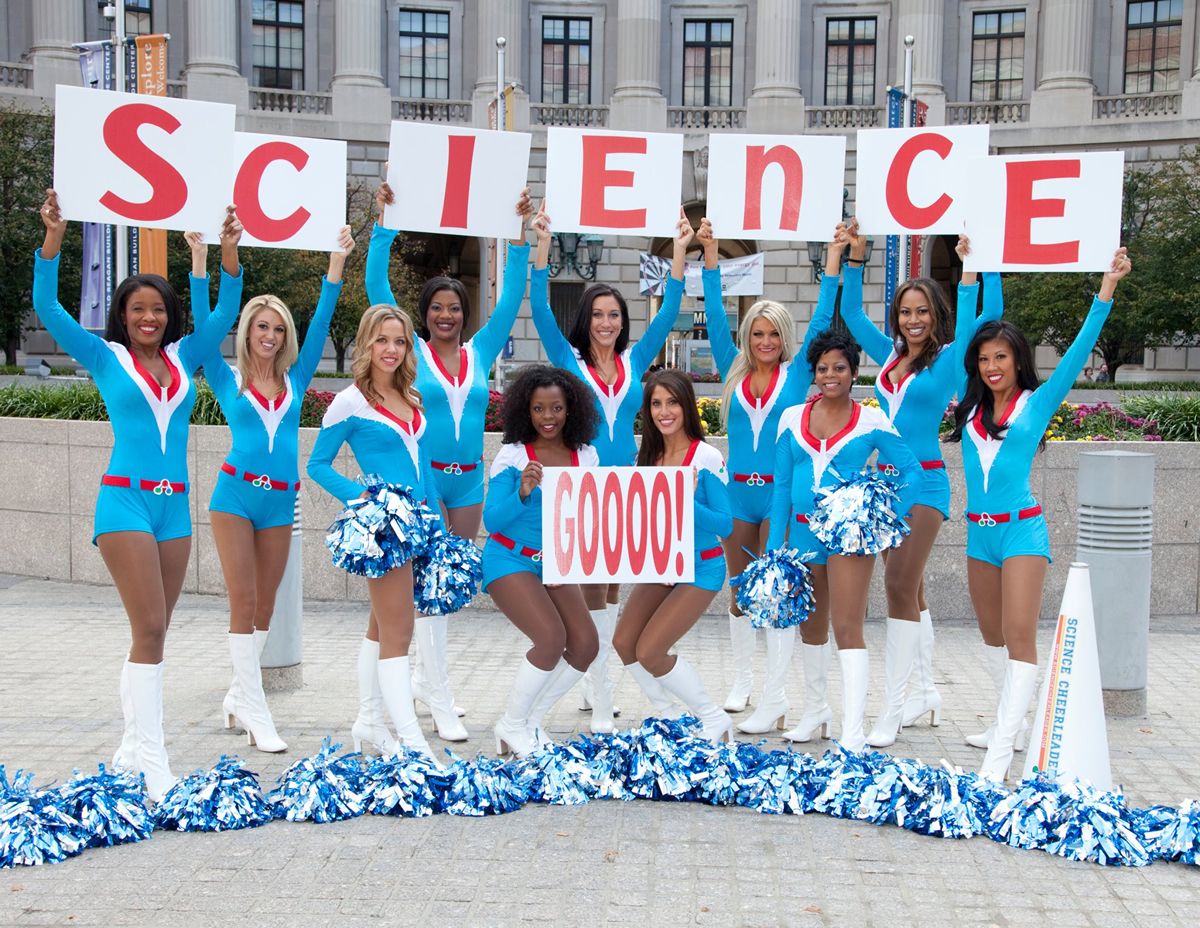
Hey fans, look alive! You are the new face of science. Citizens, scientists, and government folks huddle here to help you learn about, DO, and shape science. Above, you'll find links to the popular Brain Makeover (starring 76ers girls), Citizen Science Projects, and Science Policy discussions. Check back regularly to see what else we've got cookin'. Cheers!
I’m an R. Surprised an R would dedicate her career to science literacy and citizen participation in science and policy? Me too! I can understand why Newt Gingrich isn’t keen on spending public dollars to create, yet another, Congressional agency. But he’s wrong to think the Office of Technology Assessment, which he axed in the 1990s as part of his Contract with America, was a waste of public dollars and resources. The scientists and policy wonks who worked there published hundreds of reports at the request of Congress to help them make sense of often complicated science and technology policy matters. You can find archives of the reports here. Many are still referenced today.
Last year, I launched a national effort to reopen the OTA and it has sparked a strong, well-organized movement within the science community now to lobby Congress to refund the OTA. On one hand, I’m thrilled! Wait, let me back up a bit to tell you how I became obsessed with the OTA.
I stumbled upon the OTA as a graduate student at UPenn (this is me on graduation day with comedian Yakov Smirnoff, seriously!) where my History and Sociology of Science professor handed me an assignment to “write about the rise and the fall of the OTA.” I read every piece of literature that existed and contacted many of the authors and former staffers of the OTA. I even met with Newt Gingrich and Rep. Rush Holt and chatted with Rep. Vern Elhers and several of the architects of the OTA.
I was convinced that Congress was lost a bit without its only source of dedicated, nonpartisan tech assessments and believed the Office should be refunded (it was never really killed by Congress…it was just stripped of its $23million +/- budget).
However, in this era of public participation, open source, collaboration, and transparency, I sought to open a new, decentralized, 21st Century OTA, one that would provide a mechanism to both inform the public and seek their input before Bills are posted for public comment (who really comments on posted Bills besides lobbyists and special interest groups anyway?). It’s not an entirely new idea. Richard Sclove, the founder of the Loka Institute, more than hinted at this suggestion back in the 80s. Ironically, following a major public, political and economic disaster surrounding the 1990s roll out of genetically modified foods in Europe, the E.U. opened parliamentary OTAs with a twist: the science and technology assessment undertaken by the experts at their OTAs often include citizen participation as this has been found to help assess risk, create a better informed public, and better understand societal implications of emerging technologies. All of which are key ingredients in good policy making decisions, no? Do you want scientists or special interest groups to represent you and your questions/concerns societal impacts of science and emerging technologies? Congress knows no more than you do about these and many other scientific issues and they openly admit this. While I think it’s imperative for scientists to drive a discussion and impart their expertise on such matters, it’s equally vital that WE are afforded the opportunity to learn about and weigh in on these matters BEFORE Bills are created.
This is where the organizers of the current effort to reopen the OTA (the science community) and I differ. For the most part, they either do not understand or they don’t see the value in public participation. I can understand why if recent Town Hall meetings are what they’re basing their opinions on…but that’s not the type of participation I’m advocating for. I’m talking about a deliberate, well-constructed, inclusive approach that’s been proven to be successful in Europe (and even in China for crying out loud) and here in the U.S. although those efforts were not directly tied to Congress.
For this reason, while I wish the scientists well in their effort to persuade Congress to refund the old OTA (for the most part, although Congress did recently appropriate funds to the Government Accountability Office specifically for “technology assessments” ) I am helping to organize a new network that values the significance of both expert and citizen analysis in technology assessment. I’ll have more to say on this in the coming weeks. It’s pretty exciting and I hope you’ll join me for the journey.
In the interim, here’s what Newt recently said about the OTA. Editorial note here: this idea is worse than reopening the old OTA w/o public participation-not only is he suggesting an “expert-only” approach, but a mere handful of experts at that. This former cheerleader can smell a clique a mile away
Meet Taylor: a self-described math girl who’s as passionate about her healthcare career as she is about the L.A. Clippers and our troops overseas. I’ll let Taylor explain.
Thanks for reaching out to us, Taylor! We’re psyched to have the opportunity to interview you in our quest to playfully challenge stereotypes. Before we get started, congratulations on being on the cover of Shape magazine! So, we hear you’re a dancing CT/MRI technologist. Is that right?
Taylor: That’s right! After dancing for the Los Angelos Clippers, I decided to travel the world with the Sweethearts for Soldiers to cheer on the men and women of the United States Army, Marines, Navy, Air Force, Coast Guard. I’m hoping to meet healthcare workers overseas so I can sharpen my skills and share my experiences as a CT/MRI Technologist.
Tell us about that. What turned you onto that field?
Taylor: My father is a radiologist, so he is the type of doctor who reads the scans. I take the scans–using Xrays for the CT scans and magnetic fields for the MRIs–and a radiologist interprets them. It’s because of him that I became interested in this field.
What’s it like having one foot in the pro dancing world and the other in the field of health care?
Taylor: In my case, I believe my looks and career as a dancer results in people questioning my ability…whether it’s other technologists, physicians, administrators, and even patients sometimes! I have had to prove myself time and time again. I am confident in my capabilities and have to show that I am just as good if not better than anybody else. Read the rest of this entry »
We’ve got a few announcements to make this week re: awesome awards for inventors. More on that shortly. In the interim, check out this video from Motherboard TV about the world’s most prolific inventor. Yoshiro Nakamatsu, better known as Dr. NakaMats has over 3000 patents. If that isn’t impressive enough, things he made up include floppy disks, CDs, DVDs, and the karaoke machine. However, he won’t settle with that. He also invents ways TO invent! Like cutting off the circulation to his brain until he almost dies. Not too shabby for a young man of 82 years.
Watch Dr. NakaMats: Patently Strange here:
The other night, I was watching one of my favorite local bands, Deville, perform at a cozy DC music venue when I noticed something familiar about guitarist, Ian Graham. That’s right — the famed Science Cheerleader t-shirt! Those things are like gold around here.
Well, I “just so happened to have my HD video camera”, so expect to get the full story on how this up-and-coming band is embracing the spirit of citizen science.
Here’s a post I wrote for Discover Magazine.com yesterday about a pharmaceutical ice cream–called ReCharge–New Zealand is producing to counter side effects of chemotherapy. I learned about this in The Scientist. The most important ingredient: Lactoferrin, a protein found in milk that possesses the power to impede tumor growth and improve intestinal immune response. Wow.
Meet Rachel: A former Washington Redskins Cheerleader who enlisted in the Navy and now has her sights set on becoming an anesthesiologist. How does she synthesize these seemingly different worlds? She’s here to tell us.
Tell us about your job in the Navy and how science prepared you for that role?
I commissioned as an officer in the Navy out of college as a Registered Nurse in the Navy Nurse Corps. I started out on a Surgical/OIF/OEF injury ward at the National Naval Medical Center in Bethesda, MD for two years and switched to the multi-service Intensive Care Unit for the next two years. In that time I was deployed to a small firebase in Afghanistan with a Forward Surgical Team operating alongside Army Special Forces. Science and medicine go hand in hand. Learning all we can about the different sciences from biology to physics has assisted me and continues to assist me in understanding –and staying committed to–evidence-based practice.
Tell me about your current field of study? Why did you choose it?
I am currently in graduate school for Anesthesia. I fell in love with taking pain away, not only as a nurse, but when I worked at Bethesda on the wounded soldiers coming back from overseas. We used the newest technology in pain control and I had a chance to see how much I could help control someone’s pain. When I was deployed to Afghanistan that solidified my passion for anesthesia as I was able to “shadow” the CRNA (Certified Registered Nurse Anesthetist) for the eight months I was there, while I was also applying to Anesthesia programs. Putting people to rest, pain control, managing trauma, all were amazing amounts of autonomy and adrenaline rushes to the max for me. It has been a great challenge applying to and getting into my program but I couldn’t be more excited about where I am now.
Do you find that your looks (or being a former cheerleader) helped or hindered your professional experiences? (Were you taken seriously?)
That is such an interesting question. I was often called into different patient rooms when one of my fellow nurses or Navy corpsmen (similar to a civilian ‘’tech’’, but they are amazing and so capable of just about anything!) would slip about it to a patient and the patient wanted to meet me (or joke with me about their rival team). It was great fun and most people just wanted to know what it was like. I was surprised at the respect I received because we all know the stigmas associated with dance teams and cheerleaders. I knew I had to prove that I belonged in the military and I could be taken seriously. When I was deployed to Afghanistan I was quite firm in making sure I didn’t let it slip because I didn’t want to lose any respect I had gained. I left the blow-dryer, the hair products, the make-up, all at home. I figured if I looked au naturale no one would second guess me. I wasn’t able to keep the secret for long, it leaked from a few places and ended up spreading like wild fire. I suppose I had either proven my capabilities or folks were less superficial than I had suspected. It turned out to be a great morale booster in the end! Read the rest of this entry »
Got any bright ideas? The Federal government is looking for your suggestions on how it can achieve greater transparency and improve public participation in the decision-making process. Now through March 19th, anyone can submit ideas for how to make agencies better, including suggestions for data that should be published online.
First, pick your favorite agency from the Open Government Dashboard. You’ll be taken to their Open Government page, where you can start the idea submission process. The Open Government pages all rely on the IdeaScale software, which provides a platform to suggest ideas, vote on those submitted by others, and watch the most important ideas bubble to the top.
My colleague at the Defense Department recently wrote an article, HOW TO: Submit Your Ideas for DoD’s Open Government Plan, which lays out a step-by-step guide to contributing to its Open Government Page. You should also check out the Open Gov Tracker, which creates a tally of how well each agency is engaging citizens.
This is a great opportunity to let the government know which science issues are most important to you. Make sure to get your ideas in by March 19!
Really doesn’t have much to do with the dino sculpture my son created, next to the THANG on our family’s fireplace matel. But I bet Carl Zimmer has a guess. I recall the time I brought this heavy THANG into HIS office at Discover. Back when HE had a windowed office and I did not. Cut me a break, HE was 28, I was still young…and, oh yeah, there was that AAAS award he won for “God-like writers under the age of 30″.
I asked, genuflecting upon entering his office, as we all did: “Carl, what do you think this is? My father-in-law found it in a local, Long Beach Island, NJ, fishing shop.”
HE said: “Looks like a Mastodon tooth, maybe a molar. Probably a young one because it’s not worn down too far. You should take this to the Academy of Natural Sciences in Philly, near where you live, and I bet they can tell you more.”
So I did. I pulled the THANG out of my baby’s diaper bag, and asked the resident paleontologist: “What do you think this THANG is?”
He replied: “WHERE DID YOU GET THAT? DID YOU STEAL THAT?!”
I spent the next hour ’splainin’ the situation. Hey, Carl, back then, they never heard of YOU. The best thing I had going for me was the real baby in the real baby stroller…and two, twenty dollar bills.
But I digress.
I never did learn more about the origins of this tooth. Who knows more about this tooth? Closest to the tooth-truth earns a Tshirt. And now that I FINALLY have some street-cred with the National Academy of Sciences, I know I can find the answer there if you all fail.
“This is going to be enormously valuable to future historians because people no longer write letters or prepare archives,” said Sir Nicholas Goodison, chairman of National Life Stories, in an interview with the BBC. “E-mail is very difficult to archive and is mostly deleted by the people that write them.”